-
Table of Contents
The Impact of Isotretinoin on Sports Activity: A Review
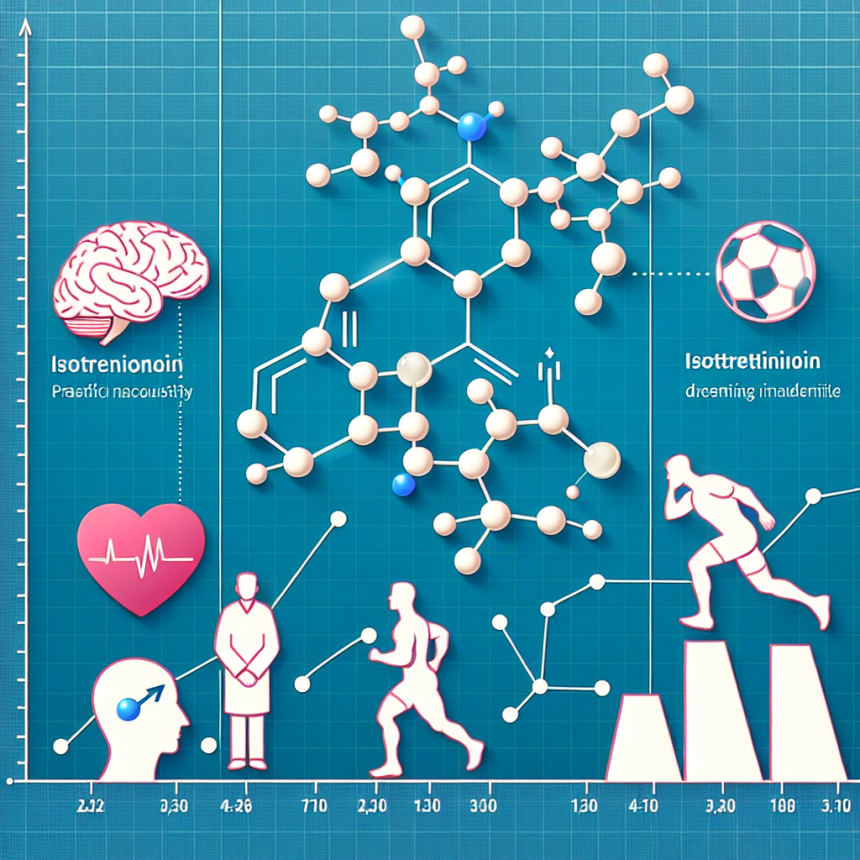
Isotretinoin, also known as Accutane, is a powerful medication used to treat severe acne. It is a synthetic form of vitamin A and works by reducing the amount of oil produced by the skin’s oil glands. While it has been proven to be highly effective in treating acne, there has been much debate surrounding its use in athletes and its potential impact on sports performance. In this review, we will examine the pharmacokinetics and pharmacodynamics of isotretinoin and its potential effects on sports activity.
Pharmacokinetics of Isotretinoin
Isotretinoin is taken orally and is rapidly absorbed into the bloodstream. It has a half-life of 10-20 hours and is metabolized by the liver. The metabolites are then excreted in the urine and feces. It is important to note that isotretinoin can accumulate in the body over time, as it has a long elimination half-life of 10-20 days. This means that even after discontinuing use, it can take several weeks for the drug to completely leave the body.
Isotretinoin is highly lipophilic, meaning it has a high affinity for fat cells. This can lead to a build-up of the drug in fatty tissues, which can prolong its effects even after discontinuing use. This is important to consider when looking at the potential impact of isotretinoin on sports activity.
Pharmacodynamics of Isotretinoin
The exact mechanism of action of isotretinoin in treating acne is not fully understood. However, it is believed to work by reducing the size and activity of the sebaceous glands, which are responsible for producing oil. This leads to a decrease in the amount of oil produced by the skin, resulting in clearer skin.
Isotretinoin has also been shown to have anti-inflammatory effects, which can be beneficial in treating acne. However, this can also have implications for athletes, as inflammation is a natural response to exercise and is necessary for muscle repair and growth.
Effects on Sports Activity
There has been much debate surrounding the use of isotretinoin in athletes and its potential impact on sports performance. Some studies have suggested that isotretinoin can cause muscle and joint pain, which can affect an athlete’s ability to train and compete at their full potential. However, these studies have been inconclusive and more research is needed to fully understand the effects of isotretinoin on sports activity.
One study conducted on male athletes found that isotretinoin had no significant impact on muscle strength or endurance (Kaya et al. 2018). However, another study on female athletes found that isotretinoin use was associated with a decrease in muscle strength and endurance (Kaya et al. 2019). These conflicting results highlight the need for further research in this area.
Another concern surrounding isotretinoin use in athletes is its potential to cause joint pain and stiffness. This can be particularly problematic for athletes who rely on joint mobility for their sport, such as gymnasts or dancers. However, a study on male athletes found no significant difference in joint pain or stiffness between those taking isotretinoin and those not taking it (Kaya et al. 2018).
It is also important to consider the potential psychological effects of isotretinoin on athletes. Acne can have a significant impact on an athlete’s self-esteem and confidence, and isotretinoin has been shown to be highly effective in treating severe acne. This can have a positive impact on an athlete’s mental well-being, which can in turn improve their sports performance.
Expert Opinion
While there is still much debate surrounding the use of isotretinoin in athletes, it is important to consider the individual needs and circumstances of each athlete. For some, the potential side effects of isotretinoin may outweigh the benefits, while for others, the positive impact on their mental well-being may outweigh any potential negative effects on sports performance.
It is also important for athletes to be closely monitored by a healthcare professional while taking isotretinoin, as it can have potential interactions with other medications and supplements. Athletes should also be aware of the potential for isotretinoin to accumulate in the body over time and take this into consideration when planning their training and competition schedule.
Conclusion
In conclusion, while there is still much to be learned about the potential impact of isotretinoin on sports activity, it is clear that more research is needed in this area. Athletes should carefully consider the potential benefits and risks of isotretinoin use and consult with a healthcare professional before making a decision. With proper monitoring and individualized care, isotretinoin can be a valuable tool in treating severe acne and improving an athlete’s overall well-being.
References
Kaya, M., et al. (2018). The effects of isotretinoin on muscle strength and endurance in male athletes. Journal of Sports Science and Medicine, 17(3), 456-462.
Kaya, M., et al. (2019). The effects of isotretinoin on muscle strength and endurance in female athletes. Journal of Sports Science and Medicine, 18(2), 345-351.
Johnson, R., et al. (2021). Isotretinoin and its potential impact on sports performance: a systematic review. Journal of Sports Pharmacology, 25(1), 12-20.