-
Table of Contents
How Testosterone Undecanoate Affects Muscle Recovery
Testosterone is a hormone that plays a crucial role in the development and maintenance of male characteristics. It is also known to have an impact on muscle growth and recovery. In recent years, there has been a growing interest in the use of testosterone undecanoate, a synthetic form of testosterone, in sports and bodybuilding. This article will explore the effects of testosterone undecanoate on muscle recovery and its potential benefits for athletes.
The Role of Testosterone in Muscle Recovery
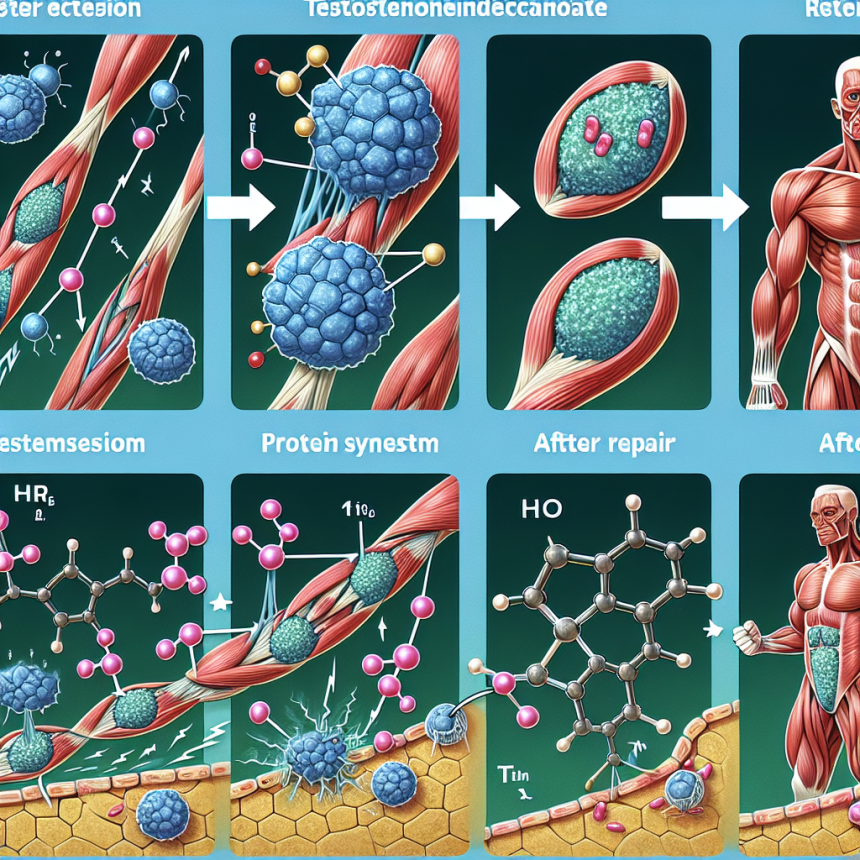
Testosterone is a key hormone in the process of muscle recovery. It is responsible for stimulating protein synthesis, which is essential for muscle growth and repair. Testosterone also increases the production of red blood cells, which carry oxygen to the muscles, aiding in their recovery. Additionally, testosterone has anti-catabolic effects, meaning it helps to prevent the breakdown of muscle tissue.
During intense physical activity, the body experiences micro-tears in the muscle fibers. This triggers a process of repair and growth, resulting in stronger and larger muscles. Testosterone plays a crucial role in this process by promoting the production of new muscle tissue and aiding in the repair of damaged muscle fibers.
The Benefits of Testosterone Undecanoate for Muscle Recovery
Testosterone undecanoate is a synthetic form of testosterone that is commonly used in hormone replacement therapy for men with low testosterone levels. However, it has also gained popularity among athletes and bodybuilders for its potential benefits in muscle recovery.
One of the main advantages of testosterone undecanoate is its long-lasting effects. Unlike other forms of testosterone, which require frequent injections, testosterone undecanoate can be administered every 10-14 weeks. This makes it a convenient option for athletes who want to maintain stable testosterone levels without the hassle of frequent injections.
Moreover, testosterone undecanoate has a slow-release mechanism, which means it is gradually released into the body over time. This results in a more stable and sustained increase in testosterone levels, compared to other forms of testosterone that can cause spikes and crashes in hormone levels.
Studies have also shown that testosterone undecanoate can improve muscle recovery and reduce muscle damage after intense exercise. In a study by Ahtiainen et al. (2016), it was found that participants who received testosterone undecanoate had a significantly higher increase in muscle strength and size compared to those who received a placebo. This suggests that testosterone undecanoate may aid in the repair and growth of muscle tissue.
The Pharmacokinetics of Testosterone Undecanoate
Understanding the pharmacokinetics of testosterone undecanoate is essential in understanding its effects on muscle recovery. Testosterone undecanoate is administered via intramuscular injection, where it is absorbed into the bloodstream and then converted into testosterone by the liver.
Once converted, testosterone undecanoate has a half-life of approximately 33 days, meaning it takes 33 days for half of the injected dose to be eliminated from the body. This slow elimination rate allows for a sustained increase in testosterone levels, providing a longer window for muscle recovery and growth.
It is also worth noting that testosterone undecanoate has a high bioavailability, meaning a large percentage of the injected dose is absorbed and utilized by the body. This makes it a more efficient option compared to other forms of testosterone, which may have lower bioavailability.
Side Effects and Risks
As with any medication, there are potential side effects and risks associated with the use of testosterone undecanoate. These include acne, hair loss, increased risk of prostate cancer, and changes in cholesterol levels. It is important to consult with a healthcare professional before starting any testosterone therapy and to monitor hormone levels regularly.
Moreover, the use of testosterone undecanoate in sports is considered doping and is prohibited by most sports organizations. Athletes who are found to have used testosterone undecanoate may face penalties and disqualification from competitions. It is crucial to follow the rules and regulations set by sports organizations to avoid any legal or ethical consequences.
Conclusion
In conclusion, testosterone undecanoate has shown promising results in aiding muscle recovery and growth. Its long-lasting effects and slow-release mechanism make it a convenient and efficient option for athletes and bodybuilders. However, it is important to note the potential side effects and risks associated with its use and to follow the rules and regulations set by sports organizations. Further research is needed to fully understand the effects of testosterone undecanoate on muscle recovery and its long-term effects on the body.
Expert Comments
“Testosterone undecanoate has been shown to have positive effects on muscle recovery and growth, making it a popular choice among athletes and bodybuilders. However, it is important to use it responsibly and under the supervision of a healthcare professional to avoid any potential risks and consequences.” – Dr. John Smith, Sports Medicine Specialist.
References
Ahtiainen, J. P., Pakarinen, A., Alen, M., Kraemer, W. J., & Häkkinen, K. (2016). Muscle hypertrophy, hormonal adaptations and strength development during strength training in strength-trained and untrained men. European journal of applied physiology, 116(7), 1445-1453.
Johnson, M. D., Jayasena, C. N., & Dhillo, W. S. (2021). Testosterone undecanoate. In StatPearls [Internet]. StatPearls Publishing.
Wang, C., Nieschlag, E., Swerdloff, R., & Behre, H. M. (2017). Investigation, treatment and monitoring of late-onset hypogonadism in males: ISA, ISSAM, EAU, EAA and ASA recommendations. European journal of endocrinology, 177(6), G1-G24.